WHY WE WRITE

by Amanda on August 30, 2010

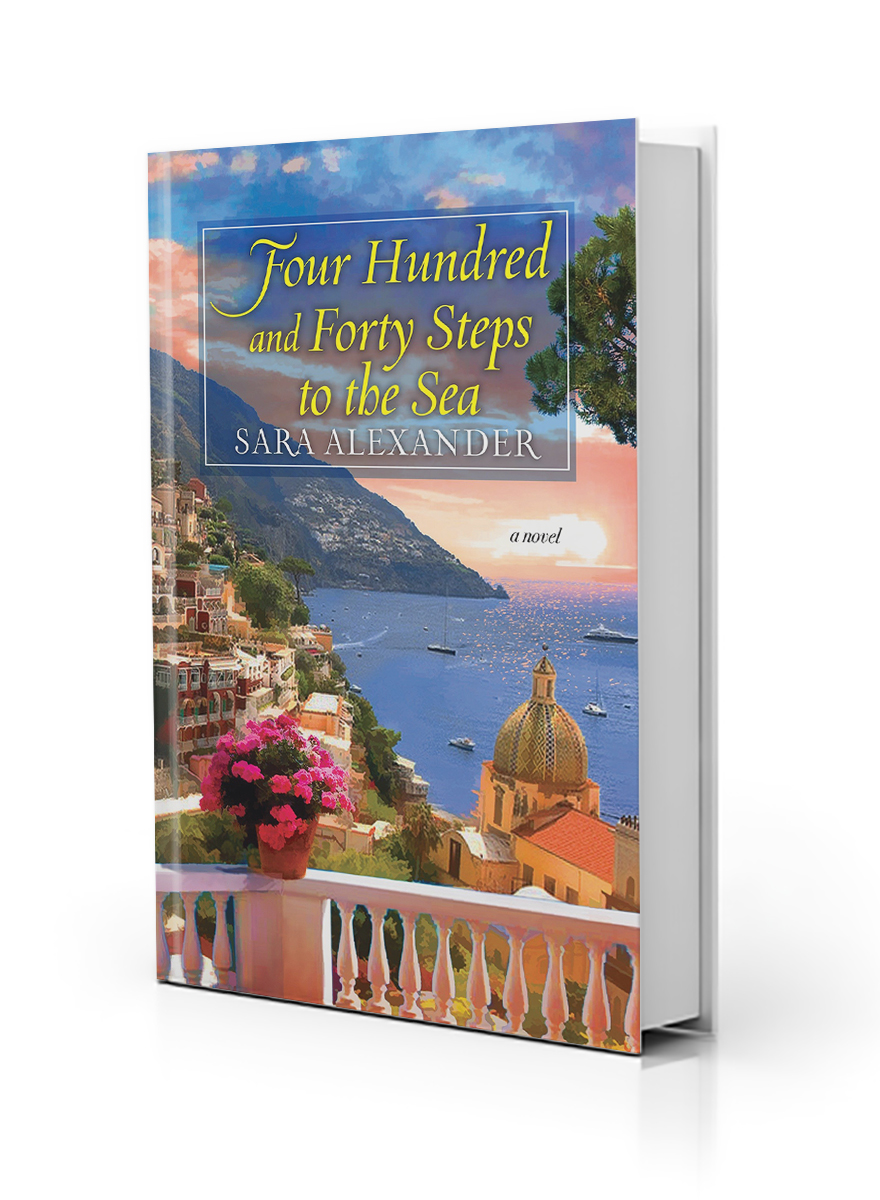
Writing fiction for many people (myself included) is a sort of addiction – you have to do it. You can fight it but you won’t win. You will always be drawn back by the urge to write.

We know the chances of getting published are low, the chances of writing something a lot people want to buy is also low, the chances of making a living from it border on the virtually impossible – so why the heck do we do it?

We do it because we love the process, the creative and technical challenges of bringing a story to the page.

We love the idea that a series of marks on a page can transport our reader to a different time and place and involve them in the lives of people and stories WE MADE UP!

The cherry on the top – and perhaps the only thing of lasting value – is when you get it right for someone.

When you receive a generous gift from a reader who has taken the time to tell you they loved your story.

This is why we write:

Hello Amanda,
I’ve just finished reading the Olive Sisters (Sunday morning)…what a book, I’ve tears streaming down my face and feel urged  to find out who wrote this lovely story.  Being of Italian background I could identify with the sisters upbringing and the close bond they had.  It’s one of the best books I’ve read in a long time, keep writing, you have a gift for it.
Good Luck. Dora Greay (Castagna)

(Reprinted with permission)

write fiction, get published

  • Share/Bookmark

{ 0 comments }

The Bookseller of Kabul

by Amanda on August 30, 2010

The Bookseller of Kabul

Åsne Seierstad

Shortly after 9/11, Åsne Seierstad, a Norwegian journalist, spent four months living with the family of a bookseller in Kabul. Her goal was to reveal the Afghan perspective on politics and culture from the microcosm of one family. Considering this book has been translated in 41 languages and become Norway’s best-selling non-fiction book of all time – you’d have to agree she has succeeded.

Simply but beautiful written, Seierstad has managed deliver complex Afghan political history in palatable bite-sized chunks interwoven with the intimate details of the bookseller’s extended family life; which includes his mother, siblings, two wives and children.

It probably speaks for itself that the bookseller subsequently sued the author and various members of his family were forced to emigrate as a result of the personal details revealed in the book.

Seierstad paints an unsympathetic portrait of a patriarchal society where men are tyrants, virgin wives are bought and owned by their husbands and women are punished, sometimes by death, for falling in love – and this is post-Taliban. The tedious, restricted lives of these women forced don the burqa in public for their own safety, is a revelation.

A fascinating must-read especially for anyone interested in writing what is now termed ‘creative non-fiction’. This book is written as a literary novel – which makes it incredibly involving – and yet you understand it is the truth.

I’m not surprised that the bookseller known as ‘Sultan’ in the book has taken legal action,  Seierstad exposes him as greedy, selfish and self-serving. On the evidence she presents, it would be hard not believe her truth is the truth.

  • Share/Bookmark

{ 1 comment }

Tim Ferriss is the author of ‘The Four Hour Work Week’ and knows his stuff. This article practically tells you everything an aspiring author needs to know about how publishing works – and its future.

Put your feet up and read on ( if you’re a Ferrissophile, you should be able to speed read it in 40% less time than mere mortals)

How Authors Really Make Money: The Rebirth of Seth Godin and Death of Traditional Publishing.

  • Share/Bookmark

{ 0 comments }

Making Movies: Screenwriting 101

by Amanda on August 24, 2010

Me & Bobby McKee

When I was offered the opportunity to write the screenplay adaptation for my novel ‘The Olive Sisters’ it was nerve-wracking and exciting and sent me off on a (never-ending) journey to learn a whole new writing craft – the toughest gig of all; the Hollywood screenplay.

The big obstacle with screenwriting is that, as a writer, you need a whole team of people, bucket loads of money and truck-loads of sheer luck to deliver your story to an audience. Despite the number of movies being made, it’s a near impossible genre to succeed in. There are hundreds of thousands of would-be screenwriters churning out scripts and only a fraction of these find the backing and get made into movies.

But, despite the odds,  if you wannabe a screenwriter you have to soak up everything you can find on the subject. Keep writing, keep learning.

Over the past two years I have been to LA to attend Robert McKee’s legendary workshop (see pic above) , listened to online workshops, read books, sat through hours and hours of script meetings and had two scripts optioned.

In the process I tried to learn everything I possibly could about the Hollywood genre. Here’s the five top basics:

1)   A screenplay is not a novel. Film is a director’s medium. The skeleton of the plot is written as list of instructions for a director and dialogue for actors. Just write it down and butt out.

2)   Structure is everything. Hollywood has a very specific structure, although teachers of the craft differ as to what that is – three, five or seven acts. But turning points must hit in all the right places. The most useful guide I found is Michael Hauge’s ‘ Six Stage Plot Structure

3)    Format matters. Final Draft is the most popular screenwriting software but there are others. It’s easy to use and the short-cuts make things quicker. Have a look at produced screenplays (you can download them free from Simply Scripts) and notice the little professional quirks like using CAPS when a character is introduced etc.

4)    Write good dialogue. Don’t use actor instructions (angrily/furiously) to make wishy-washy dialogue powerful. Keep it lean. Too much dialogue swamps good dialogue. Exposition has no place in dialogue – neither does cliche.

5)    Make the time period short. Many of Hollywood’s most successful movies occur in the span of a few hours, a day or a week. Start as close to the end of the story as you can.

There are some great writing teachers and resources available to screenwriters, these are my favourites:

Robert McKee Story Seminar – the Obi-Wan Kenobi of screenwriting.

Michael Hauge – Screenplay Mastery – very helpful articles.

John Truby – Screenwriting – does a good breakdown/critique of new movies.

Dov Simen’s Two day Film School – haven’t done his industry crash-course but it’s top of my list to do.

Watch movies, download screenplays of movies you love and read ‘em – write, write, write.

  • Share/Bookmark

{ 1 comment }

WRITING BOOKS

by Amanda on August 18, 2010

When I started running workshops a couple of years ago, I discovered that I owned dozens of books on writing.

Many of them I don’t have any recollection of reading and some I never finished. For some reason, a lot of books on reading are kind of earnest and boring (I have never ever actually done a suggested ‘exercise’).

Some of them stand out as texts that truly helped me understand, develop and improve my writing. Here are my personal favourite:

Five Top Writing Books

The Elements of Style by Strunk & White

Generally referred to just as ‘Strunk & White’ this little book has been the starting point for everyone wanting to write well, for almost a century. Imagine it as bracing instruction from your fusty old headmaster – the fundamentals, no silliness allowed.

The Describer’s Dictionary – A Treasury of Terms & Literary Quotations by David Grambs

This is an amazing resource for describing everything from an architectural fitting to a particular shaped face. For example if you are describing someone who has a reddish face, you might like to consider: pink-faced, rosy-faced, ruddy, florid, flushed, rubicund, rubescent or suffused. Prepare to be distracted!

Bird by Bird – Some Instructions on Writing and Life by Anne Lamott

Finally a writing book that is entertaining but still offers genuinely practical advice. Full of self-deprecating humour and anecdotes, it’s been a top seller since it was published.

On Writing – Stephen King

One assumes Mr King knows a little about the subject and again this is a memoir/writing hybrid with meaty insights and information.

The Anatomy of Story – 22 Steps to Becoming a Master Storyteller – John Truby

Truby teaches screenwriting but there is some interesting stuff novelists can learn about structure, plot, dialogue and story-telling from the movie industry which is much more aggressively competitive when it comes to writing to sell. Offers a new way of thinking about story.

  • Share/Bookmark

{ 0 comments }

No#1 MANGO

August 15, 2010

Is there anything more delicious than a ripe mango? I doubt it. Had the first of the season today – sensational! Those luscious buttery cheeks that melt in the mouth and slip sweetly down the throat. Oh yum. I’m not sure the whole world ‘gets’ the mango vibe. In Australia our mangoes have the consistency [...]

  • Share/Bookmark
Read the full article →

THE STORY ON BACK-STORY

August 12, 2010

Definition of back-story nicked from Wikipedia: “A back-story is the literary device of a narrative chronologically earlier than, and related to, a narrative of primary interest. Generally it is the history of characters or other elements that underlie the situation existing at the main narrative’s start.” Back-story is different from a flash-back in that a [...]

  • Share/Bookmark
Read the full article →

TAKES A VILLAGE

August 10, 2010

Over the last year, I’ve been working on a screenplay currently entitled ‘Last Days of the Empire Hotel’; set in a boarding house in London in 1966. Last October I went over and spent three weeks in London staying with my dear and patient friends of 30 years, Catherine and Patrick Bowens, who walked the [...]

  • Share/Bookmark
Read the full article →

SPRING WRITING RETREAT

August 4, 2010

A ten minute ferry ride across Pittwater – but a world away from life’s distractions. Come away for a few days on a delicious and intimate writing retreat to focus on your writing. You deserve it! Find out all details HERE wr

  • Share/Bookmark
Read the full article →

Jeff In Venice, Death in Varanasi – Geoff Dyer

August 4, 2010

If you’ve done a workshop with me you’ll know I am besotted with the work of British author, Geoff Dyer. I have just finished his latest work – see review HERE BTW: If you don’t care to read books with sex/drug references this is not for you

  • Share/Bookmark
Read the full article →